
The Housing Market Is Evolving: Why Townhomes Are Emerging as Australia's "Missing Middle"
- Joean Soliman

- 2 days ago
- 4 min read

Australia's housing market is changing—and so are the homes people want to live in.
Population growth, rising land values, affordability pressures and changing lifestyles are reshaping how future communities will be built. For investors, understanding these structural shifts is just as important as watching interest rates or market cycles.

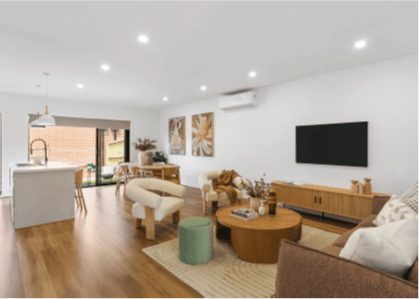


One of the biggest opportunities lies in the growing gap between traditional detached homes and high-density apartments.
The Rise of the Missing Middle
For decades, the Australian dream centred on a detached home with a backyard. While that aspiration remains, delivering house-and-land packages in well-connected locations has become increasingly difficult.
Land is more expensive, development costs have risen, and available sites close to jobs, schools and transport are limited.
At the same time, apartments don't suit everyone. Many buyers and renters still want extra bedrooms, private outdoor space and greater privacy, without the price tag of a standalone home.
This is where townhomes are increasingly filling the gap.
Why Ownership Structure Matters
Although the terms townhouse, townhome and Terrace House are often used interchangeably in everyday conversation, there can be differences in terminology, construction method and ownership structure depending on the builder and development.
In Australia, a builder or construction company is more likely to refer to a property as a Townhouse where the dwellings are attached through a shared party wall and are commonly part of a strata plan.
Where a builder uses the terms Townhome or Terrace House, the adjoining dwellings may instead be constructed using separate, independent walls, rather than sharing a physical party wall. This is generally referred to as discontinuous construction or a double-wall system.
There are a couple of advantages to this construction method:
Acoustic isolation: Because the walls and framing are physically separated, sound and impact vibrations—such as footsteps, doors closing or activity against the wall—are less likely to transfer between the adjoining homes.
Greater structural independence: Each dwelling has its own independent wall structure rather than physically sharing the same framing system with the neighbouring property.
Potentially separate ownership structures: This construction method is commonly seen in some modern freehold Townhome and Terrace House developments, where each dwelling can have its own individual title rather than being held under a traditional strata arrangement.
Traditional townhouses are commonly part of a strata or community title development, with shared common areas and ongoing owners corporation responsibilities.


Many modern townhomes, however, are individually titled, giving owners their own land component and greater independence, often without shared common property or strata fees. For investors, this can improve buyer appeal while reducing ongoing ownership costs.
Australia's Housing Needs Are Changing
Australia simply needs more homes.Under the National Housing Accord, the Federal Government has committed to delivering 1.2 million new homes by 2029. Meeting that target will require more than expanding suburban estates—it will require smarter use of existing land, planning reform and a broader mix of housing options. This is why planners increasingly refer to the "missing middle": homes that provide a balance between detached housing and apartment living. Townhomes are one of the clearest examples of this shift.
Better Use of Land Creates Better Communities
Governments are increasingly focusing on unlocking underutilised land through urban renewal, rezoning and infrastructure investment.
Former industrial sites, surplus government land and ageing commercial precincts are being transformed into connected communities close to employment, transport, schools and lifestyle amenities.
Infrastructure has always been one of the strongest drivers of long-term property demand. As new transport links and services reshape neighbourhoods, well-located housing becomes increasingly valuable.
Terrace homes are not a new concept in Australia. They have a long history, particularly across the inner-city and inner-ring suburbs of Sydney, Melbourne and Adelaide, where they provided an efficient way to accommodate more housing close to employment, transport and amenities when land was limited.
Many of these historic terrace streets remain highly desirable today, demonstrating the enduring appeal of this style of housing.
We are now seeing elements of that traditional terrace-house concept make a comeback in newer estates, driven by rising land values, limited land availability and increasing demand for well-located, lower-maintenance homes.
Modern Terrace Houses and Townhomes can provide buyers with the benefits of a more affordable land footprint while still offering proximity to shopping, schools, transport, recreation and other essential amenities.

Why Families Are Driving Demand
For investors, one question matters most: Who will want to live there? Townhomes appeal to a broad range of tenants, particularly families seeking more space than an apartment can offer without stretching to the cost of a detached home.
Many modern townhomes offer four bedrooms across approximately 180–220m², multiple living areas and private outdoor space—providing much of the functionality of a traditional family home with less land maintenance.
Lifestyle preferences are evolving as well. Busy families increasingly prioritise convenience over large backyards, valuing proximity to schools, transport, parks and employment. Well-designed townhomes provide the space families need while supporting a more manageable, low-maintenance lifestyle.



This broad appeal creates demand from families, professionals and downsizers alike.
Investing in Long-Term Fundamentals
Property markets move through cycles, but the underlying drivers of demand evolve much more slowly.
Population growth, housing supply constraints, infrastructure investment and affordability are reshaping Australia's residential landscape.
Townhomes are not simply a new product type—they are part of a broader evolution in housing, designed to meet the needs of future communities.
For investors, the opportunity isn't about following the latest trend. It's about recognising where long-term demand is heading and investing in assets positioned to benefit from it.
At Calla Property, we focus on identifying investment opportunities supported by enduring fundamentals—not short-term headlines—helping our clients build portfolios designed for the future.
This info is general and for illustrative purposes only. It doesn't take your personal financial situation into account and isn't intended as financial, legal, or tax advice. Any projections are just a guide based on third-party data. We always recommend checking in with your accountant or a licensed professional before making any investment moves.
+61 485 976 989 | +61 482 080 189
Strong fundamentals. Smarter opportunities. Long-term growth.


Comments